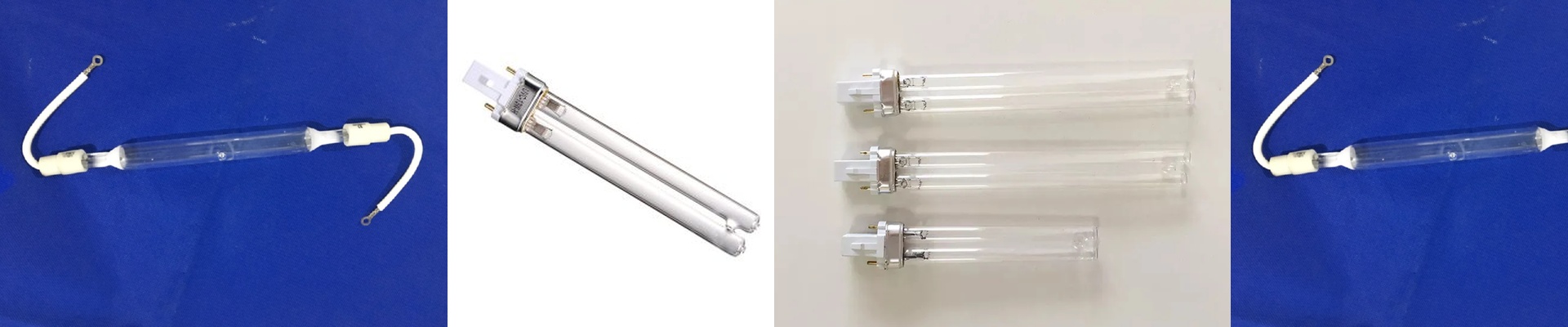

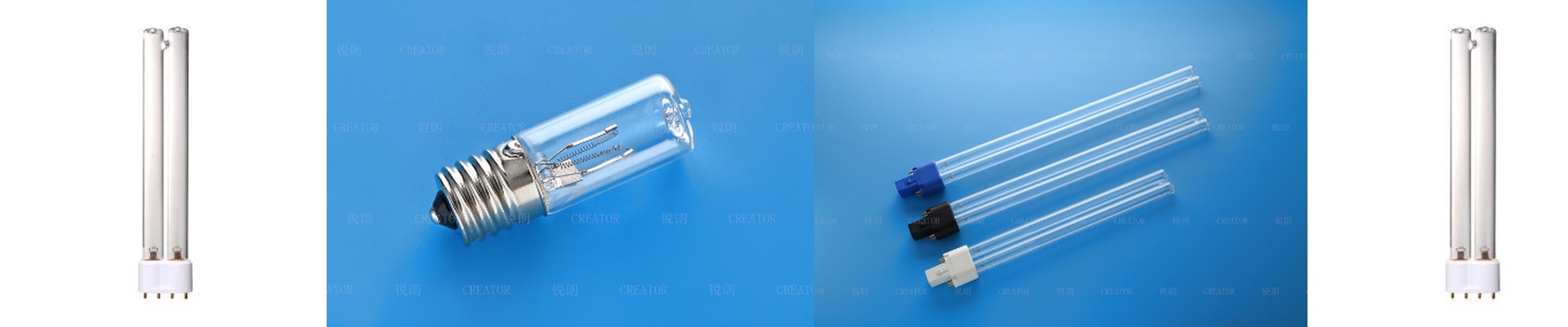
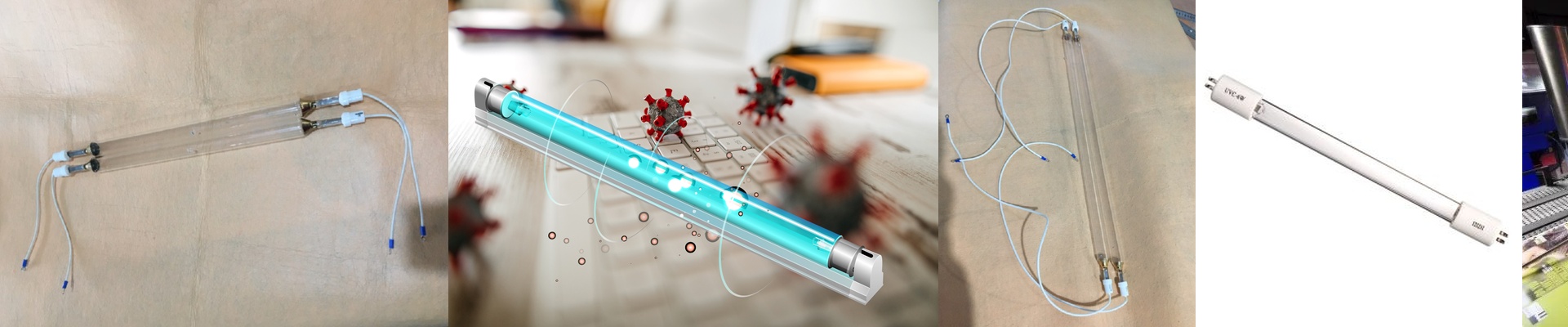
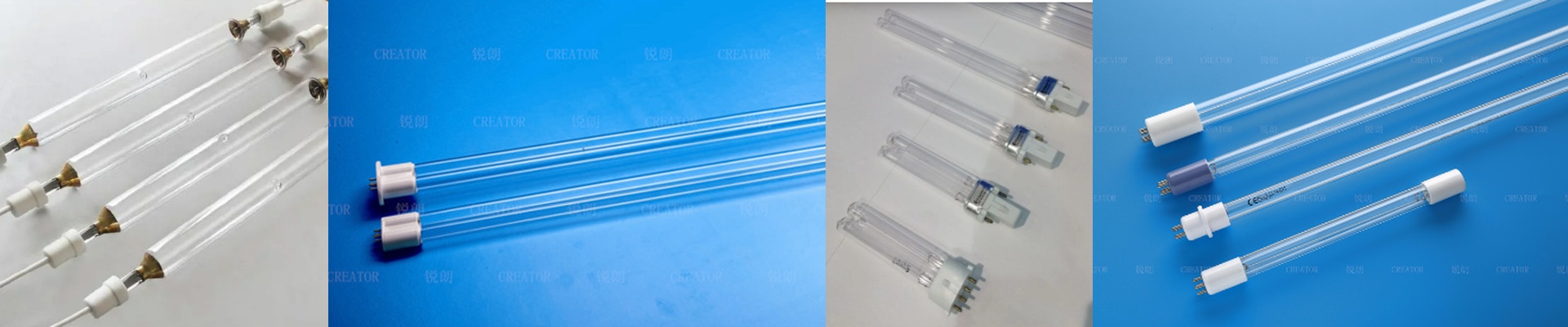
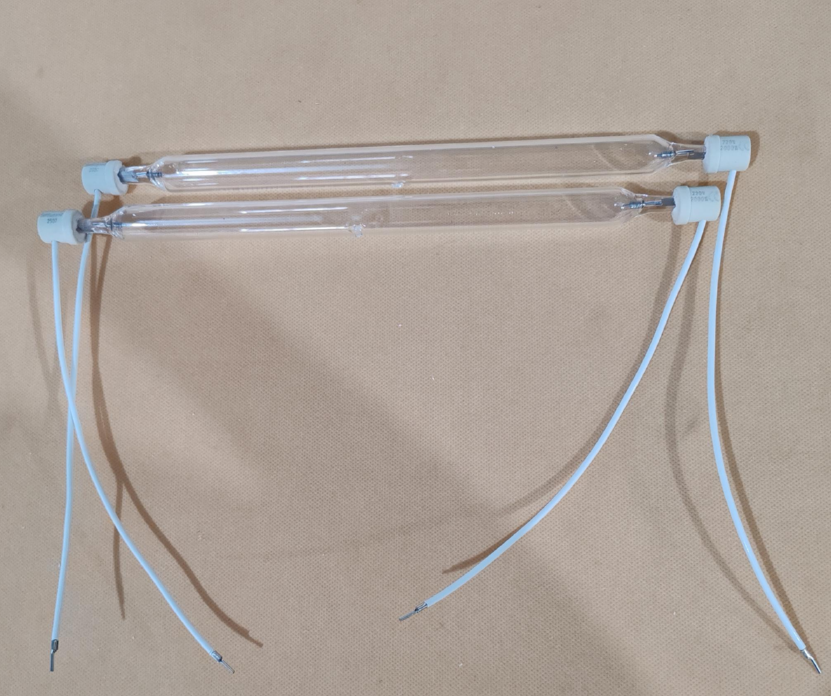
You’re running a line that can’t afford to stop. The foreign spare you need for the UV curing unit is stuck in air freight, quoted at a month. Every minute idle, you’re burning substrate, labor, and schedule. We build high-output amalgam UVC lamps for exactly that pressure: engineered for steady curing performance, and delivered on a timeline that matches industrial reality—custom configurations as fast as 7 days, with rapid现货 support when the deadline is even tighter.
What actually matters: high-output amalgam UVC, built around curing physics
A UV lamp isn’t just “a light.” It’s the trigger for the photochemistry. In UV offset, flexo, and screen printing, the ink’s photoinitiators respond to specific wavelengths, and the cure happens based on delivered energy density (mJ/cm²)—not perceived brightness. Our high-output amalgam UVC lamps are designed to deliver repeatable spectral output and stable irradiance under real press conditions.
- Amalgam technology: The amalgam formulation stabilizes mercury vapor pressure across a wide operating window, so UVC output stays consistent even when arc power changes. That matters because ink curing is sensitive to spectral shifts—especially around the dominant mercury lines that drive cross-linking.
- Spectral output and matching: The lamp output is aligned to the mercury emission bands that do the work in typical UV ink systems. When your ink chemistry is tuned for standard UV spectra, the lamp supports predictable initiation without over-driving the cure.
- Peak irradiance and energy density: High peak irradiance enables short exposure windows, which is what supports higher press speeds. But it only works if it’s paired with the right reflector geometry and lamp-to-substrate distance, so the dose is uniform across the print width. We engineer the lamp and reflector as a matched set to hit the required energy density at the cure plane.
- Light stability: low decay, steady output: In production, lamp output drift is the quiet variable that bites you. We design for low attenuation over time, so the irradiance curve stays flat across long runs. The practical payoff is fewer tweaks, fewer rejects, and stable cure density from the first sheet to the last.
- Life and reliability: Long life is only useful if output stays stable. We focus on electrode integrity, fill stability, and materials that hold up under high-output operation. Units are routinely run to 5,000+ hours with output drop held within tight limits, so you can plan maintenance instead of reacting to emergencies.
- Ozone management: Many UV systems have to be managed for ozone. Our lamps are configured to be ozone-free in typical air-cooled installations, which simplifies ventilation and protects operator safety.
Why this works on the floor: 7-day delivery without compromising the cure
The real problem isn’t just the lamp—it’s the risk of downtime. When a foreign spare is quoted at a month, you’re left with two bad choices: wait, or throw in a lamp that may underperform. Underperformance shows up fast: incomplete cure, adhesion failure, surface tack, and inconsistent color density. It also shows up later in maintenance—more lamp changes, more downtime, more spare inventory. We solve this two ways. One, we take the lead-time penalty out of the equation. We keep flexible manufacturing capacity for high-output amalgam UVC lamps, so we can configure and ship quickly—often within 7 days for custom orders. That gets your UV curing module back online without turning your schedule into a contingency exercise. Two, we deliver the performance you need to run at production speed.
- Stable cure at press speed: Output stability reduces the need to slow the press to compensate for falling irradiance, so you can hold rated throughput.
- Consistent print quality: With controlled spectral output and uniform dose, cure density stays repeatable across the web or sheet—supporting color consistency and coating adhesion.
- Lower operating cost per cured meter: High electrical-to-UV conversion efficiency, combined with long life, lowers energy per cured unit and cuts spare consumption.
- Faster recovery after changeover: Immediate full-output start-up and stable output during warm-up reduce startup scrap and shorten make-ready. That’s how you keep the line moving: a lamp engineered for curing, delivered when your existing supply chain fails.
What you need to know: fit, compatibility, and one honest constraint
A UV lamp never works alone. It has to match the curing module, the ballast, the reflector, and the cooling setup. Before ordering, confirm the interface details that actually matter:
- Arc length and lamp diameter: These determine fit in the curing chamber and shape the irradiance profile at the substrate.
- Base type, connector, and polarity: Get this wrong and you’re buying installation delays—and you can damage the lamp or ignitor.
- Power and ballast compatibility: The lamp must match the existing ballast curve. A mismatch can cause unreliable start-up, hot running, or unstable spectral output.
- Reflector condition: Even a great lamp underperforms behind a tired reflector. Foiled reflectors, oxidation, and misalignment cut delivered dose and create uneven cure.
- Cooling and substrate clearance: Adequate airflow and the correct standoff distance keep lamp output stable and prevent substrate heating. And here’s the constraint you should plan for up front: high-output amalgam UVC lamps are sensitive to operating position. If you run outside the rated orientation, amalgam distribution changes and output stability suffers. If your curing module demands a specific lamp orientation, specify it during configuration. We can build to that orientation, but the limitation is real—don’t leave it to chance. When a month-long wait threatens your delivery commitments, you don’t need hope. You need a high-output amalgam UVC lamp engineered for stable, long-life curing—and a delivery model that matches industrial urgency. Tell us your curing module, your press constraints, and your deadline. We’ll configure the lamp and get it to you in days, not weeks.